Updated November 3, 2026 · 6 min read · Sources listed at the end
What is a keto macro calculator?
Definition
A keto macro calculator sets your daily carbohydrate cap, usually 20-50 grams of net carbs, then sets protein to protect muscle and gives fat the remaining calories, so your body shifts toward burning fat and ketones for fuel.
Most calculators work from the top down: calories, then percentages. Keto works from the carb cap up. That is why a fixed "70% fat, 25% protein, 5% carbs" rule can mislead: at 1,500 kcal, 5% carbs is 19 g, but at 3,000 kcal it is 38 g. The cap is what puts you in ketosis, not the percentage.
Net carbs, fibre and the number you actually track
- Total carbs are all the carbohydrate on a nutrition label.
- Fibre is the part your body does not digest into glucose.
- Net carbs = total carbs − fibre (and, if you choose, sugar alcohols that do not raise blood sugar, which vary by product).
The calculator reports a net carb target (default 25 g, or 20 g if calories are below 1,500) and a total carb figure that allows for some fibre. Most people reach ketosis somewhere between 20 and 50 g net carbs a day. If you want to be stricter or looser, type your own cap in the Net carb cap box that appears when keto is selected.
How protein and fat are set
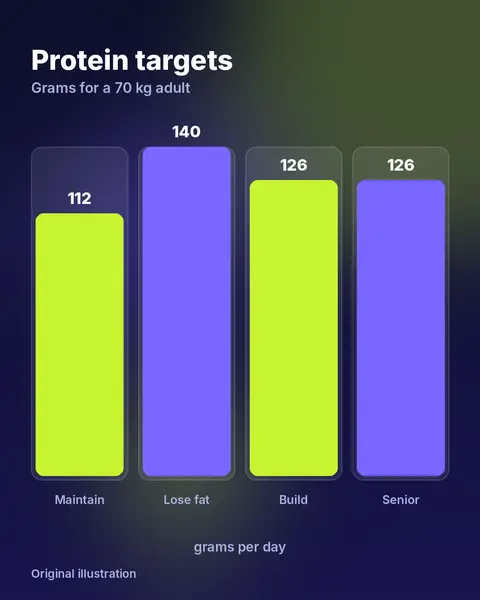
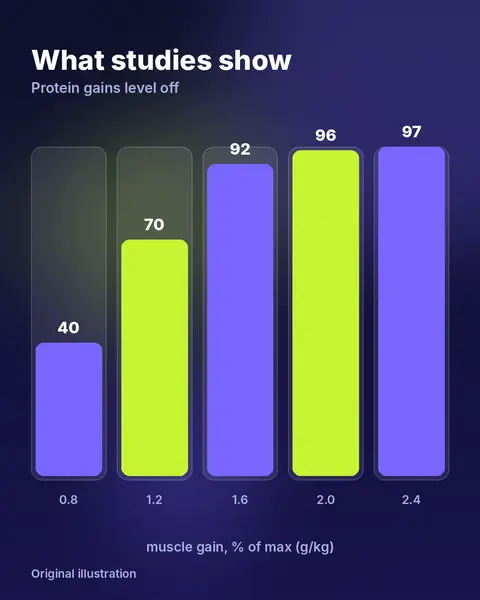
Protein is set at about 1.6-2.0 g per kg of body weight (or from lean mass if you enter body fat). Contrary to an old myth, moderate protein does not "kick you out of ketosis" for most people, and too little protein costs you muscle. Fat fills whatever calories remain. Here is how that looks for a few sizes, all produced by the tool.
| Profile | Calories | Net carbs | Protein | Fat | Split (P/C/F) |
|---|---|---|---|---|---|
| Woman, 35 y, 70 kg, fat loss at 0.5% pace | 1,533 | 25 g | 140 g | 91 g | 37 / 10 / 53 |
| Man, 35 y, 90 kg, fat loss at 0.5% pace | 2,380 | 25 g | 169 g | 169 g | 28 / 8 / 64 |
| Man, 35 y, 90 kg, maintenance | 2,875 | 25 g | 135 g | 238 g | 19 / 7 / 74 |
| Woman, 50 y, 62 kg, desk life, fat loss | 1,200 (floor) | 20 g | 120 g | 66 g | 40 / 11 / 49 |
The numbers show why keto percentages are not fixed. In a deficit, fat is the flexible macro. When you diet, fat from your own body supplies part of the energy, so you eat less fat than at maintenance. A 70% fat diet is a maintenance recipe, not a weight-loss one.
Keto-friendly foods and rough net carbs
| Food | Portion | Net carbs |
|---|---|---|
| Egg | 1 large | 0.6 g |
| Avocado | half | 2-3 g |
| Salmon, cooked | 140 g | 0 g |
| Chicken thigh, cooked | 150 g | 0 g |
| Broccoli, cooked | 1 cup | 4-5 g |
| Spinach, raw | 2 cups | 1 g |
| Almonds | 28 g | 3 g |
| Cheddar cheese | 28 g | 0.4 g |
| Olive oil | 1 tbsp | 0 g |
| Blueberries | half cup | 8 g |
| Cauliflower, cooked | 1 cup | 3 g |
Check the food macro calculator to search more foods and log them against your daily targets.
The "keto flu", electrolytes and fibre
The first one or two weeks can bring headaches, fatigue and cramps. That is usually water and sodium loss, because lower insulin makes the kidneys excrete more of both. Common practical steps:
- Salt your food generously unless a doctor has told you not to.
- Eat potassium-rich low-carb foods such as spinach, avocado and mushrooms.
- Drink enough water; the calculator estimates a planning figure under Overview.
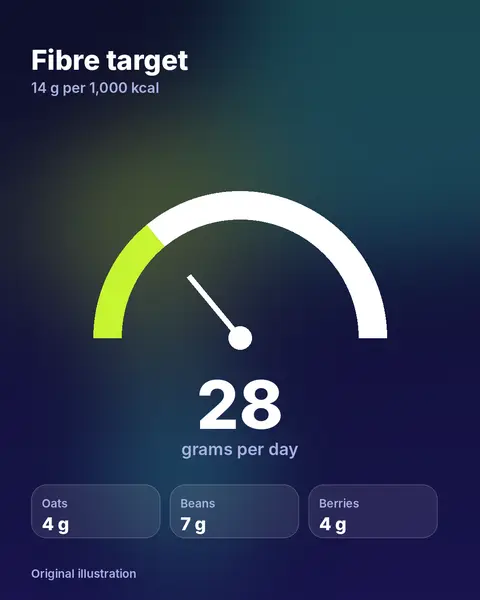
- Hit your fibre target (about 14 g per 1,000 kcal) with vegetables, chia and flax.
Who should not start keto without medical advice
People with type 1 or type 2 diabetes on glucose-lowering drugs, those taking blood-pressure medicines, pregnant or breastfeeding women, people with kidney, liver or pancreatic disease, and anyone with a history of eating disorders should speak to a clinician first.
What the research says
- Keto is not magic for fat loss. In a tightly controlled study by Hall and colleagues (2016), men with obesity switched from a high-carb diet to an isocaloric ketogenic diet and did not lose more body fat; there was a small, transient increase in energy expenditure. Calories still decided the result.
- Keto can still be a useful tool. Many people find that high protein and fat keep them full, which makes a calorie deficit easier. Adherence, not metabolism, is often the real benefit.
- Fibre and saturated fat. US guidelines advise keeping saturated fat under 10% of calories; a keto plan built on olive oil, avocado, fish and nuts makes that easier than one built on butter and processed meat. The calculator shows a saturated-fat ceiling in your Overview.
Original data: protein share goes up as calories go down
Across the four profiles above, protein climbs from 19% of calories (maintenance, 2,875 kcal) to 40% of calories (1,200 kcal floor) while fat falls from 74% to 49%. That is the engine protecting muscle first and filling fat second. If your protein share looks high, remember that in grams it is about the same as on any other eating style.
Our take: what is overrated, underrated and wrong
Ketone strips and exact ratios. Weight, hunger, energy and a steady net-carb count tell you more than a colour on a strip.
Vegetables. Keto is not a bacon diet; leafy greens, broccoli, cauliflower and courgettes carry the fibre and micronutrients.
"Eat as much fat as you want." In a deficit, extra fat just means fewer body-fat calories burned. Count it.
A four-week keto start
- Days 1-3: set the net-carb cap, clear high-carb staples, stock eggs, fish, leafy vegetables, olive oil and nuts.
- Week 1: hit the carb cap and drink plenty of water and salt. Don't judge the scale.
- Weeks 2-3: hit protein and calories. Track hunger and energy.
- Week 4: compare weekly average weight with the plan. Adjust calories by 100-150 kcal if needed. If you are miserable, switch to a lower-carb (not zero-carb) style in the calculator.
FAQ
How many carbs should I eat on keto?
Most people enter ketosis at 20-50 g of net carbs a day. The calculator defaults to 25 g (20 g at low calories) and lets you set your own cap.
What is the keto macro ratio?
It varies with calories. Typical ranges are 5-10% carbs, 20-30% protein and 60-75% fat, but the net-carb cap matters more than the percentage.
How much protein is too much on keto?
For most people, up to about 2 g per kg of body weight does not prevent ketosis. Going too low is the more common problem.
Can I do keto while building muscle?
Yes, though many lifters train better with some carbs. A targeted approach (a few extra carbs around workouts) is popular; try the carb cycling calculator for ideas.
Do I need to count calories on keto?
For fat loss, yes. Hunger drops on keto for many people, but calories still decide weight change.
Is keto safe long term?
Evidence is limited and individual. Discuss it with your clinician, and have regular blood tests if you stay on it for months.
Sources
- Hall KD, et al. Energy expenditure and body composition changes after an isocaloric ketogenic diet in overweight and obese men. Am J Clin Nutr. 2016;104(2):324-333.
- Mifflin MD, et al. Am J Clin Nutr. 1990;51(2):241-247.
- Institute of Medicine. Dietary Reference Intakes for Macronutrients. 2005.
- U.S. Department of Agriculture and U.S. Department of Health and Human Services. Dietary Guidelines for Americans, 2025-2030.
Keep going
Weight Loss Macro Calculator
Pace-based deficit with protein that protects muscle.
Macro Percentage Calculator
Turn a calorie target and percentage split into grams.
Macro Calculator for Men
Targets by size, training and goal.
What Are Macros?
Protein, carbs and fat explained simply.
Keto Macros Explained
Where 70/25/5 comes from and when to adjust it.
Food Macro Calculator
Search foods and log against your daily targets.