Updated November 3, 2026 · 5 min read · Sources listed at the end
What are macros? They are protein, carbohydrate and fat, the three nutrients that supply almost all of your food energy.
Macros in one minute
Definition
Macros (short for macronutrients) are the nutrients we eat in large quantities that supply energy and building material: protein, carbohydrate and fat. Alcohol also provides energy but is not an essential nutrient.
Each macro has a calorie value per gram, a main job in the body, and a typical healthy range:
| Macro | Calories per gram | Main job | Reference range (adults) |
|---|---|---|---|
| Protein | 4 | Build and repair tissue, make enzymes and hormones | 10-35% of calories |
| Carbohydrate | 4 | Primary fuel for brain and muscles | 45-65% of calories |
| Fat | 9 | Hormones, cell membranes, vitamin absorption, stored energy | 20-35% of calories |
| Alcohol | 7 | Energy only | As little as possible |
The ranges come from the Acceptable Macronutrient Distribution Ranges (AMDR) set by the US Institute of Medicine. They are deliberately wide because healthy eating comes in many shapes.
For official public-health guidance on healthy eating patterns, see the Dietary Guidelines for Americans.
Protein
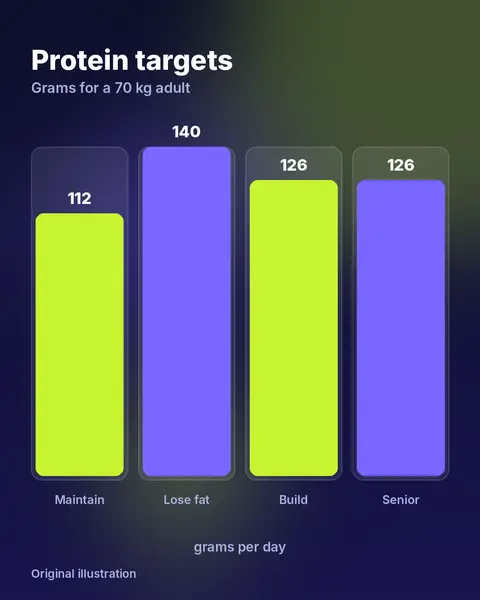
Protein is built from amino acids. Nine of them are essential, meaning your body cannot make them, so you must eat them. Protein repairs muscle after training, supports immune function, and makes you feel full for longer than carbs or fat do.
How much? The official minimum (RDA) is 0.8 g per kg of body weight per day to avoid deficiency. For active people and anyone dieting, research supports higher intakes of about 1.6-2.2 g per kg. The 2025-2030 US Dietary Guidelines advise roughly 1.2-1.6 g per kg for adults in general.
Good sources: chicken, turkey, fish, eggs, Greek yogurt, cottage cheese, tofu, tempeh, lentils, beans, whey or pea protein.
Carbohydrates
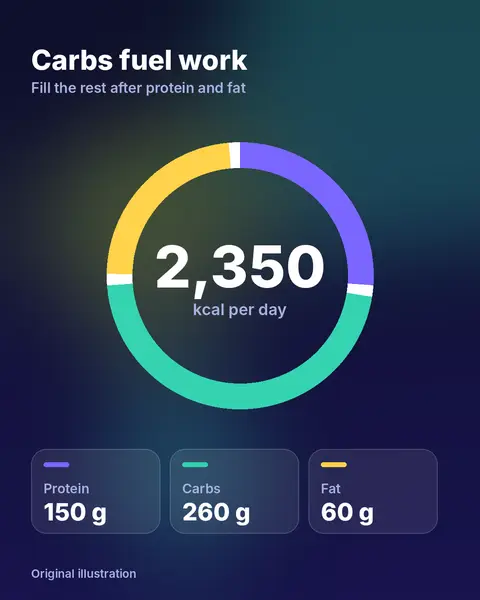
Carbs include sugars, starches and fibre. Your body turns digestible carbs into glucose, the preferred fuel for your brain and a main fuel for muscles during hard exercise. Fibre is the part you cannot digest, and it supports gut health and fullness.
How much? Most adults do well with about 45-65% of calories, with lower amounts being reasonable for people who prefer low-carb eating. A useful rule is to eat most carbs as whole, high-fibre foods and keep added sugar under 10% of calories.
Good sources: oats, rice, potatoes, sweet potatoes, fruit, beans, lentils, whole-grain bread and pasta, vegetables.
Fat
Fat is the most energy-dense macro at 9 calories per gram. It builds cell membranes, helps make hormones, carries vitamins A, D, E and K, and slows digestion. Fats come in several types:
- Monounsaturated (olive oil, avocado, almonds): generally heart-friendly.
- Polyunsaturated, including omega-3 (fatty fish, walnuts, flax): essential and heart-friendly.
- Saturated (butter, fatty meat, coconut oil, cheese): keep under 10% of calories.
- Trans fat (partially hydrogenated oils): avoid where possible.
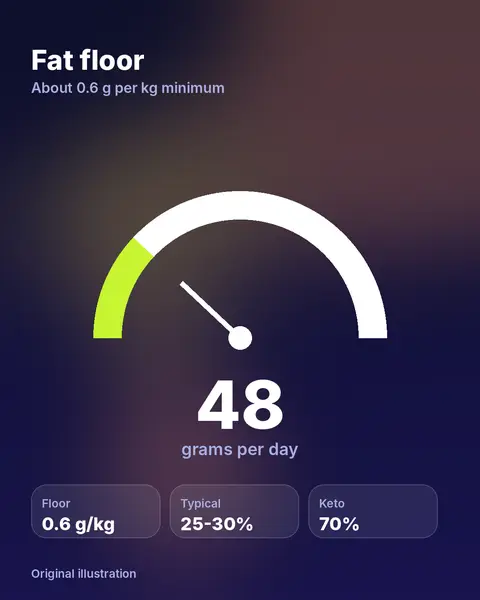
How much? About 20-35% of calories, never less than about 0.5-0.6 g per kg of body weight for most people.
How macros relate to calories
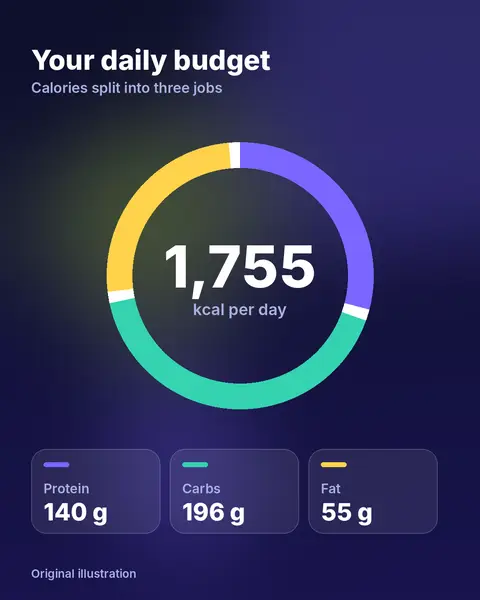
If you eat 150 g protein, 250 g carbs and 70 g fat, the calories are:
- Protein: 150 × 4 = 600 kcal
- Carbs: 250 × 4 = 1,000 kcal
- Fat: 70 × 9 = 630 kcal
- Total: 2,230 kcal
That is the whole idea of tracking macros: the grams add up to the calories, but they also tell you what kind of calories you are eating. Try it yourself in the macro to calorie calculator.
Macros versus micronutrients
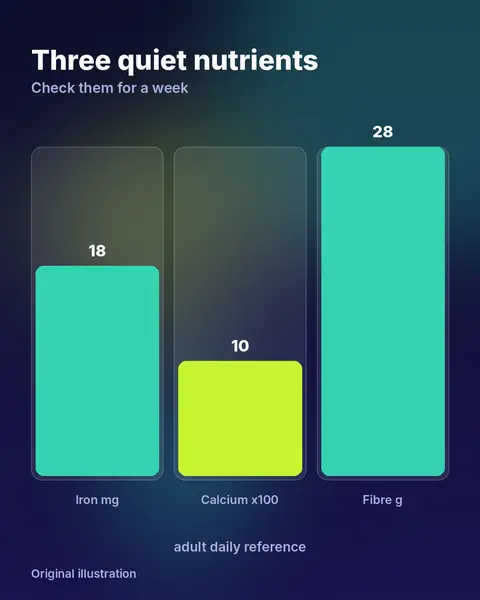
Micronutrients are vitamins and minerals such as iron, calcium and vitamin D. You need them in milligrams or micrograms, not grams, but they are no less essential. A good macro plan built around whole foods, vegetables and fruit tends to take care of most of them.
Why people track macros
- Fat loss: protein protects muscle and appetite while calories fall.
- Muscle gain: hitting a protein target and a calorie surplus.
- Performance: matching carbs to training load.
- Health management: carb counting for diabetes or protein limits for certain kidney conditions (only under medical guidance).
- Awareness: learning what a portion really contains.
Tracking is optional. Some people thrive on it; for others it triggers anxiety around food. If numbers make you stressed or you have a history of disordered eating, skip it or work with a professional.
How to start in four steps
- Get your numbers from the macro calculator.
- Choose a tracker or just a notebook. See our guide to macro tracking apps.
- Weigh food for two weeks to calibrate your eye.
- Review weekly, not daily, and change one thing at a time.
Original data: the same calories, three different plates
Three 2,000-kcal days: a high-protein day (200 g protein, 150 g carbs, 66 g fat), a balanced day (125 g, 250 g, 56 g) and a low-carb day (150 g, 50 g, 133 g). Protein ranges from 25% to 40% of calories and carbs from 10% to 50%, yet each day lands within a few calories of 2,000 kcal. Calories decide weight change, while the split changes hunger, performance and food variety.
Our take: what is overrated, underrated and wrong
Perfect ratios. A 40/30/30 plate is not more magical than a 30/40/30 one.
Fibre. It is the quiet hero that most trackers do not emphasise, and most people eat too little.
"Fat makes you fat" and "carbs make you fat." Excess calories make you gain weight, whichever macro supplies them.
FAQ
What does "macros" mean?
It is shorthand for macronutrients: protein, carbohydrates and fat. They are the nutrients you need in grams per day rather than milligrams.
How many calories are in each macro?
Protein and carbohydrate provide about 4 calories per gram. Fat provides about 9 calories per gram. Alcohol provides about 7.
Are macros the same as calories?
No. Calories measure energy; macros are the nutrients that supply it. Macro grams multiplied by their calorie values add up to your calories.
What is a good macro ratio?
There is no single best ratio. A common healthy range is 10-35% protein, 45-65% carbs and 20-35% fat, with many active people placing protein toward the upper half.
Do I need to track macros to be healthy?
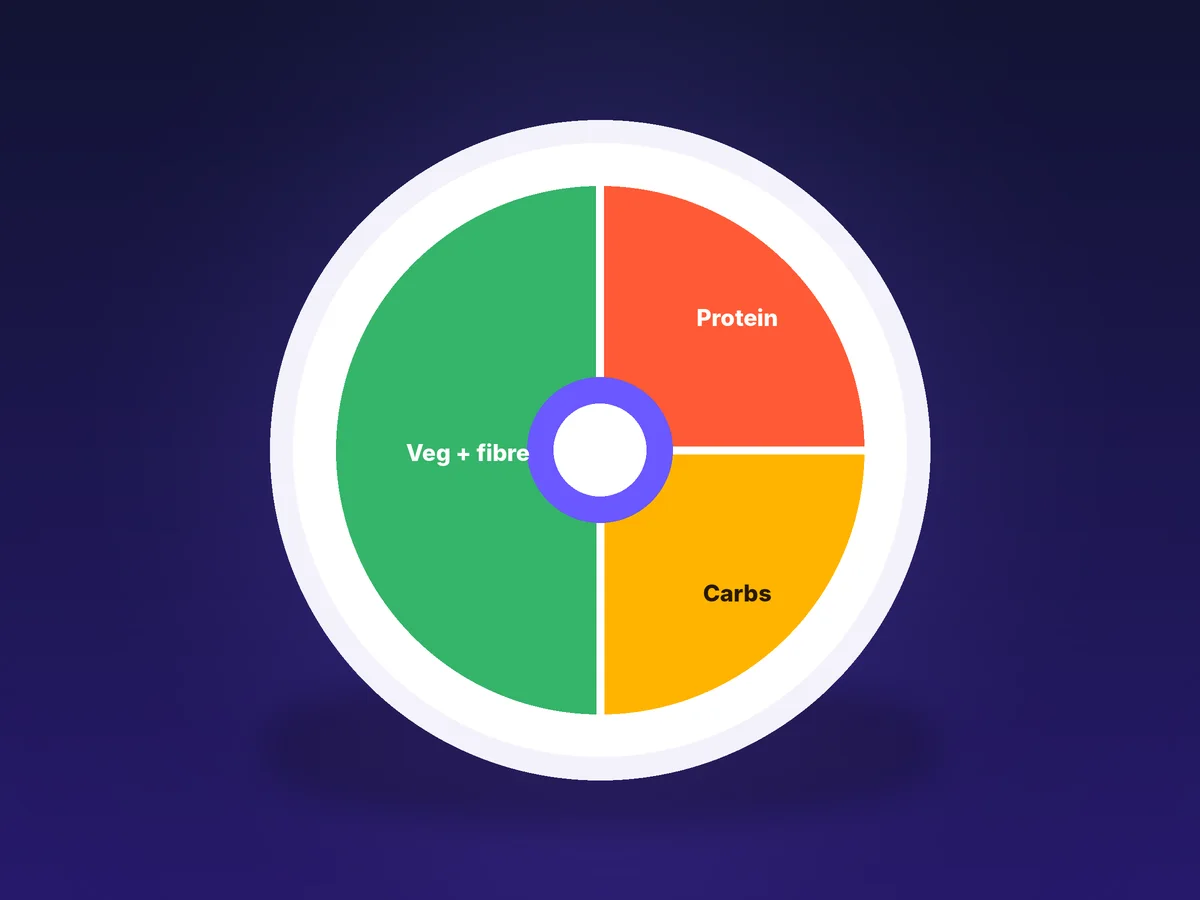
No. Tracking is a tool for specific goals. Plenty of people eat well using plate-building habits instead.
What is the difference between macros and micros?
Macros are the big three nutrients measured in grams. Micros are vitamins and minerals measured in milligrams or micrograms.
Sources
- Institute of Medicine. Dietary Reference Intakes for Energy, Carbohydrate, Fiber, Fat, Fatty Acids, Cholesterol, Protein, and Amino Acids. National Academies Press, 2005.
- U.S. Department of Agriculture and U.S. Department of Health and Human Services. Dietary Guidelines for Americans, 2025-2030.
- Atwater WO, Bryant AP. The availability and fuel value of food materials. 1900.
- Morton RW, et al. Br J Sports Med. 2018;52:376-384.
Keep going
How to Calculate Macros
The six-step maths with a worked example.
Weight Loss Macro Calculator
Pace-based deficit with protein that protects muscle.
Food Macro Calculator
Search foods and log against your daily targets.
Macro to Calorie Calculator
Convert grams of macros to calories and percentages.
IIFYM Calculator
Flexible dieting macros and guardrails.
Best Macro Tracking Apps
How to choose a tracker, with a checklist.