Updated November 3, 2026 · 7 min read · Sources listed at the end
This macro calculator for women starts from female body size, a safer calorie floor and higher protein, then shows every step of the maths. It also works as a macro calculator for weight loss female readers can trust: the sections below explain the calorie floor, protein, iron and calcium, the menstrual cycle and a simple first-month plan.
What makes a macro calculator "for women"?
Definition
A macro calculator for women uses the female form of the resting-energy equation, applies a higher calorie floor, and chooses protein, carbohydrate and fat targets that respect women's typical body size, bone health and iron needs.
The main mathematical difference is small: the Mifflin-St Jeor equation subtracts 161 from the result for women where it adds 5 for men, a 166 kcal gap at the same size, age and weight. Most of the real-world difference comes from body size and lean mass, which are lower on average. Everything else is about context: what happens at 1,200 calories, why protein matters for bones, and how the month can change appetite.
Realistic numbers for different women
These are outputs from the calculator above, all balanced split, so you can sense-check your own result.
| Profile | Maintenance | Goal | Calories | Protein / Carbs / Fat |
|---|---|---|---|---|
| 25 y, 165 cm, 60 kg, moderate | 2,085 | Fat loss at 0.5%/wk | 1,755 | 120 / 196 / 55 g |
| 35 y, 165 cm, 70 kg, light | 1,918 | Fat loss at 0.5%/wk | 1,533 | 140 / 136 / 48 g |
| 45 y, 165 cm, 68 kg, light, high protein | 1,822 | Maintain | 1,822 | 150 / 192 / 51 g |
| 55 y, 160 cm, 68 kg, desk life | 1,493 | Maintain | 1,493 | 109 / 160 / 46 g |
| 28 y, 165 cm, 60 kg, moderate | 2,085 | Beginner muscle gain | 2,293 | 108 / 305 / 71 g |
The calorie floor and why it exists
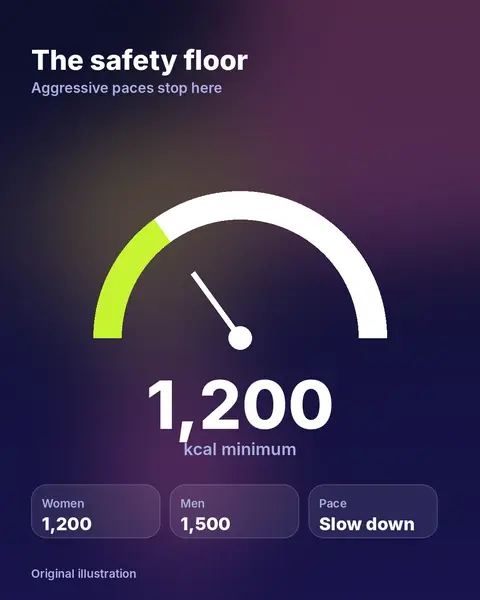
Women's smaller bodies can hit very low calorie targets quickly. The tool applies a floor of 1,200 kcal and shows a warning when it steps in. Eating well below the energy your body needs, especially while training hard, can lead to what sports medicine calls low energy availability: disrupted periods, lower bone density, repeated injuries, poor sleep and low mood. If you ever lose your period while dieting, treat that as a clear signal to eat more and speak with a doctor.
A floor is not a goal
Landing on the floor means the pace you picked is too aggressive for your size. Move the pace slider down, or extend your target date, until the warning disappears.
Protein: more important than most women are told
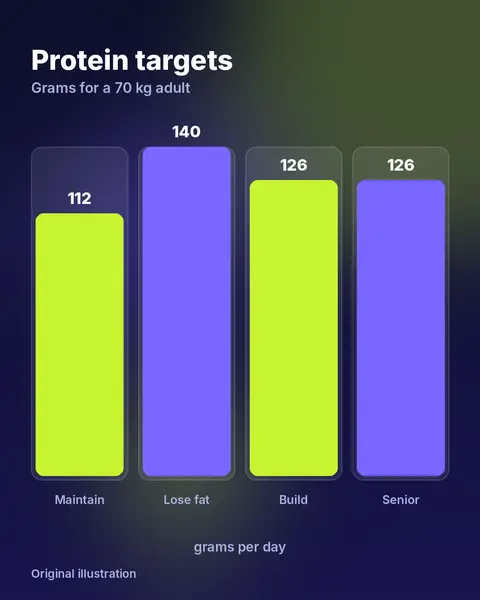
Protein for women is often set too low because it is calculated off a smaller body weight and a long-held belief that women "don't need much". The defaults here are about 1.6 g per kg at maintenance and 2.0 g per kg when dieting, meaning a 60 kg woman targets 96 g to maintain and 120 g to lose fat. That helps with fullness, muscle retention and bone, and it sits inside the 1.4-2.2 g/kg range supported for active adults by sports-nutrition position stands (Jäger et al., 2017).
Tips that make it easier:
- Anchor each meal with 25-35 g of protein: 3 eggs, a cup of Greek yogurt, 120 g of chicken or a tofu scramble.
- Keep two "emergency" protein snacks: cottage cheese, edamame, a shake.
- Spread intake over three or four meals rather than piling it into dinner.
Fat loss for women: four levers, in order of importance
- Calories. A steady deficit of roughly 0.4-0.5% of body weight a week works for most women. A 70 kg woman at that pace eats about 1,533 kcal, not an arbitrary 1,200.
- Protein. Aim for about 2.0 g per kg while dieting (140 g for the same woman). It protects muscle and reduces hunger.
- Strength training. Two to three sessions of progressive lifting tell your body to keep muscle while you lose fat. Cardio is optional; steps are a bonus.
- Sleep and stress. Short sleep raises hunger and lowers training quality. Seven hours is a practical target.
Training for women: how food changes around workouts
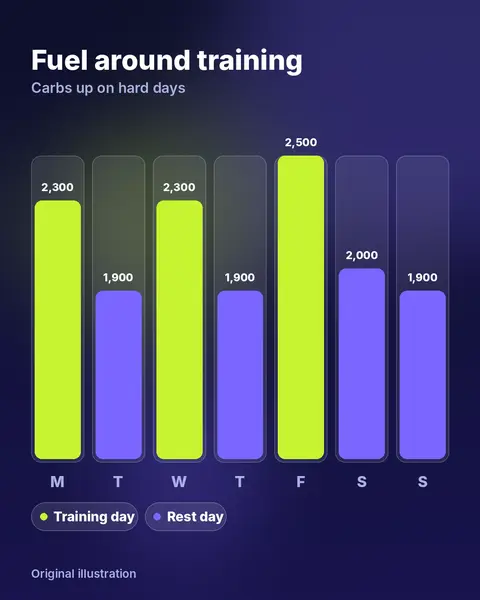
- Heavy lifting days: keep carbs higher before and after the session; they fuel it and help recovery.
- Hard conditioning (boxing, intervals): expect appetite to rise; add 100-200 kcal as carbohydrate rather than letting the deficit swell.
- Rest days: keep protein the same. Trim carbs slightly if you feel your calories are tight.
- If you try carb cycling, see the carb cycling calculator.
Iron, calcium and fibre: three micronutrient checks
Macros are the headline, but three nutrients deserve a glance when women cut calories:
| Nutrient | Why it matters | Easy sources |
|---|---|---|
| Iron | Menstruating women lose iron monthly; the US adult RDA is 18 mg/day before menopause and 8 mg after | Red meat, lentils, spinach with vitamin C, fortified cereals |
| Calcium | Bone density peaks by the late twenties; the adult RDA is 1,000 mg/day (1,200 mg after 50) | Dairy, fortified plant milks, tofu set with calcium, sardines |
| Fibre | About 14 g per 1,000 kcal supports gut health and fullness | Oats, beans, berries, vegetables, whole grains |
The calculator reports a fibre target with every result. For iron and calcium, check labels for a week and see whether you are close.
The menstrual cycle: what to expect and what to ignore
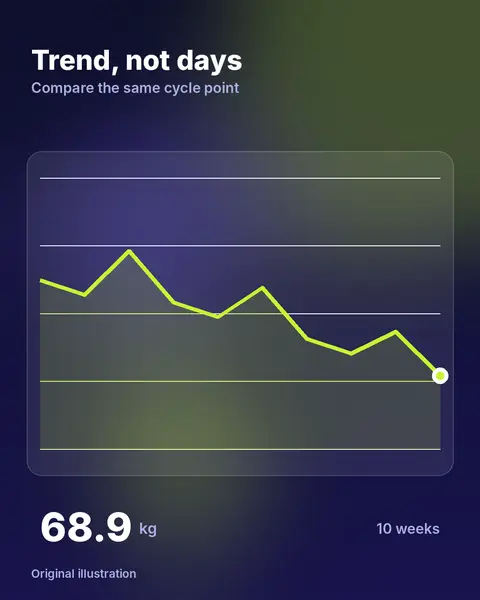
Research suggests resting energy use and appetite can rise slightly in the luteal phase (roughly the two weeks before a period), and water retention makes the scale jump by a pound or three. Those effects are small and differ between women. A practical approach:
- Compare weights at the same point in successive cycles, not week to week.
- Do not cut calories because the scale rose in the days before your period. Wait until it settles.
- If cravings spike, move 100-150 kcal from fat to carbs rather than "falling off".
- Do not assume hormonal changes mean you must eat differently every day; for most women one steady target works.
Different life stages
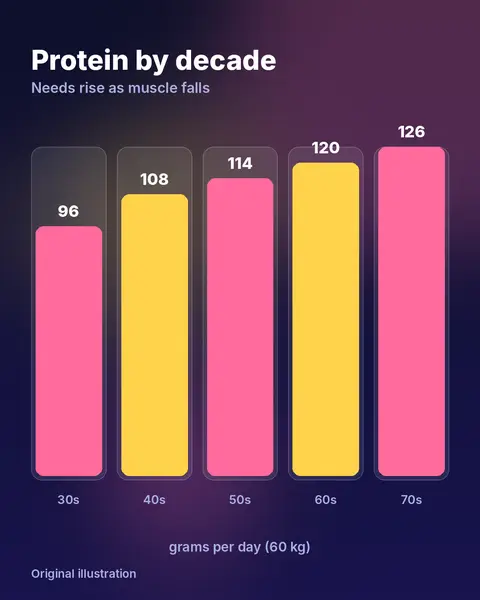
Needs shift with age. After 40, protein and strength training matter more because muscle and bone decline faster: see the macro calculator for women over 40. If you eat no meat, the vegetarian macro calculator covers protein sources and iron.
What the research says
- Equation accuracy. Mifflin-St Jeor predicted resting metabolic rate within 10% of measured values for more people than competing equations in a major systematic review by Frankenfield and colleagues (2005).
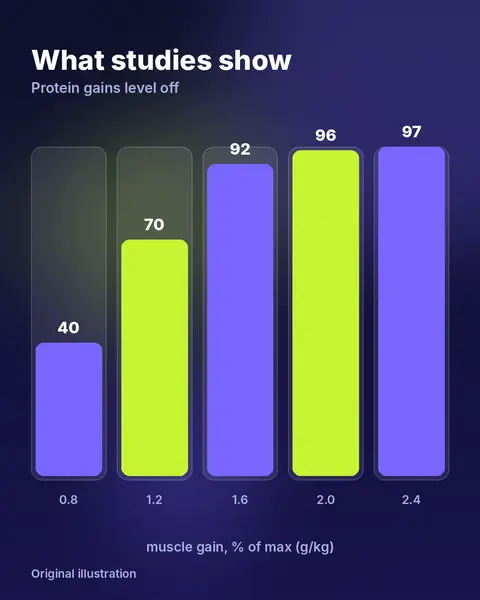
- Protein and muscle. Morton and colleagues (2018) found muscle gains levelling off near 1.6 g/kg protein per day in a meta-analysis that included women.
- Strength training. Women who lift build muscle at similar relative rates to men; the absolute numbers are smaller because starting lean mass is lower.
Original data: how much does 10 kg of extra weight change the result?
For a 35-year-old woman at 165 cm and light activity, moving from 60 kg to 70 kg raises resting energy by 100 kcal and maintenance by about 137 kcal, roughly 8% more food. Her protein target rises by 16 g at maintenance and 20 g while dieting. In relative terms body size moves protein by about as much as it moves calories, so do not copy a friend's macros unless you share her size.
Our take: what is overrated, underrated and wrong
Cardio as the main fat-loss tool and "toning" workouts with tiny weights. Calories and heavier lifting do the real work.
Strength training and protein. Together they protect bone and muscle through perimenopause and beyond.
The idea that women should eat 1,200 calories to lose weight. For most active women that is an under-fuelling target, not a plan.
A simple first-month plan
- Calculate with a pace of 0.4-0.5%, and check the sample day tab to see what the portions look like.
- Hit protein first. If you only manage one target, make it protein.
- Take your average weight across a full cycle before judging.
- Lift two to three times a week and walk daily.
- After four weeks, use the Check-in tab to adjust by no more than 100-150 kcal.
FAQ
How many calories should a woman eat to lose weight?
Most women lose fat at about 15-25% below maintenance, which is commonly 1,500-1,900 kcal depending on size and activity. Never go below roughly 1,200 kcal without medical supervision.
What is a good macro split for women?
A balanced split near 25-30% protein, 40-45% carbs and 25-30% fat suits many women. The more reliable guide is grams: about 1.6-2.0 g of protein per kg of body weight, a fat floor of about 0.6 g per kg and carbs for the rest.
Should women eat differently on their period?
Not necessarily. Some women feel hungrier before their period. If you do, give yourself 100-150 extra calories on those days instead of changing your whole plan.
Is the calculator suitable during pregnancy or breastfeeding?
No. Calorie and nutrient needs increase and weight loss is not advised without clinical guidance.
Do women need less protein than men?
Per kilogram of body weight, no. In total grams, women usually need less simply because they weigh less.
How do I use this if I have PCOS or thyroid conditions?
Treat the output as general information and work with your clinician. Some women with PCOS find higher-protein, lower-glycemic eating helpful; use the Lower carb or Mediterranean style as a starting point and discuss it with your doctor.
Sources
- Mifflin MD, et al. Am J Clin Nutr. 1990;51(2):241-247.
- Jäger R, et al. ISSN position stand: protein and exercise. J Int Soc Sports Nutr. 2017;14:20.
- Frankenfield D, et al. J Am Diet Assoc. 2005;105(5):775-789.
- Morton RW, et al. Br J Sports Med. 2018;52:376-384.
- Mountjoy M, et al. IOC consensus statement on Relative Energy Deficiency in Sport (RED-S): 2018 update. Br J Sports Med. 2018;52:687-697.
- NIH Office of Dietary Supplements. Iron and Calcium fact sheets for health professionals.
- Institute of Medicine. Dietary Reference Intakes for Energy, Carbohydrate, Fiber, Fat, Fatty Acids, Cholesterol, Protein, and Amino Acids. 2005.
Keep going
Women Over 40 Calculator
Protein-first, strength-supported targets.
Weight Loss Macro Calculator
Pace-based deficit with protein that protects muscle.
Vegetarian & Vegan Calculator
Plant-protein adjusted targets and vegan sample days.
Body Recomp Calculator
Maintenance calories, high protein, smart carb cycling.
Carb Cycling Calculator
High and low carb days that average to your target.
What Are Macros?
Protein, carbs and fat explained simply.